

Real Estate in Mauritius: Assessment and Prospects 2026
- 24 Sep 2025
- |
- by Céline VALLEE LACOSTE
- |
- Real Estate
- |
The luxury real estate market in Mauritius stands out in 2025 with sustained dynamics, driven by a demanding international clientele and an increasingly sophisticated offering of high-end properties. Benefiting from a stable political environment and an integrated sustainable development, this destination attracts investors and buyers seeking a precious balance between comfort, nature, and innovation. The growth observed since 2024 particularly focuses on emblematic areas such as Grand Baie, Tamarin, and Le Morne, where prices per square meter often exceeding 200,000 Rs reflect increased demand. At the same time, the rise of Smart Cities like Moka Smart City opens new perspectives for projects integrating green technologies and smart home solutions, meeting the expectations of a clientele in search of exclusivity and sustainability.
In this context, prestigious real estate in Mauritius confirms its attractiveness thanks to favorable acquisition regimes and well-adapted tax advantages, such as those offered under the Property Development Scheme or the Smart City Scheme. Foreign investors, mainly from Europe, Asia, Africa, and the Middle East, are attracted by the returns from high-end seasonal rentals and assured asset appreciation. This trend is accompanied by a rise in properties incorporating personalized services, home automation, enhanced security, and dedicated spaces for teleworking, perfectly suited for digital nomads and wealthy expatriates.
Analysis of the luxury real estate market in Mauritius: dynamics, growth, and most sought-after areas
The luxury real estate market in Mauritius is characterized by a constant increase in its volumes and values. Between 2022 and 2024, the total value of transactions in the premium segment exceeds 44 billion MUR, with 23 billion recorded solely in 2023. This excitement reflects a marked enthusiasm for properties offering an exceptional living environment, particularly in renowned coastal areas. The political stability of Mauritius is a major factor that reassures international clientele and encourages investors to confirm their operations in an often uncertain global context.
Reasons for international attractiveness: stability, tax advantages, and appreciation potential
The Mauritian government has implemented a clear policy aimed at facilitating the welcome of foreign investors. They particularly benefit from an advantageous tax system with no capital gains tax, inheritance tax, or wealth tax (IFI). The local taxation offers a fixed income tax rate of 15%, accompanied by non-double taxation agreements with many countries. These mechanisms provide unique legal and fiscal security, particularly attractive to European and Asian clientele.
Competitive advantages are complemented by the enduring appreciation of real estate assets in Mauritius. The prices observed in areas such as Grand Baie or Riviere Noire have experienced an average annual increase of over 5% since 2024. Key factors contributing to this appreciation include:
-
The growing demand related to high-end tourism and expatriates
-
The quality of infrastructure and services associated with prestige
-
The increasing integration of ecological and technological solutions
Evolution of real estate prices and volume of transactions in premium Mauritian sectors
The table below summarizes the evolution of average prices per square meter and transactional dynamics in the main areas of the luxury real estate market in Mauritius between 2022 and 2024:
|
Area |
Average price (Rs/m²) in 2022 |
Average price (Rs/m²) in 2024 |
Variation % |
Transaction volume (MUR billion) |
|---|---|---|---|---|
|
Grand Baie |
185,000 |
210,000 |
+13.5% |
12.5 |
|
Tamarin |
160,000 |
178,000 |
+11.25% |
8.1 |
|
Riviere Noire |
150,000 |
165,000 |
+10% |
6.7 |
|
Beau Champ |
170,000 |
185,000 |
+8.8% |
4.2 |
|
Le Morne |
200,000 |
220,000 |
+10% |
3.5 |
The concentration of investments in these premium sectors is explained by their access to exclusive amenities, exceptional landscapes, and proximity to economic and tourist activity centers. The rise of real estate projects associated with the Smart City also contributes to shaping a promising future for the Mauritian luxury market.
Types of luxury properties and architectural innovations: the new Mauritian standard
In a context where well-being and sustainability are as important as prestige, exceptional properties in Mauritius are reinventing the codes of luxury. The architecture combines natural elegance and functionality, while home automation and innovations in renewable energy more than ever integrate into the daily lives of demanding residents.
Villas, penthouses, and integrated residences: a panorama of exceptional properties in Mauritius
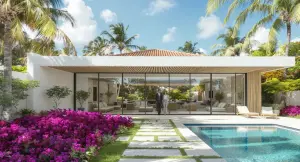
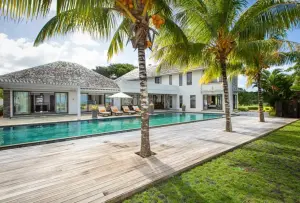
Villas remain the most sought-after type in the luxury real estate market. These spacious residences offer:
-
Multiple bedrooms and open spaces
-
Infinity pools with panoramic views of the ocean or golf courses
-
Interior layouts featuring private spas and reception lounges
-
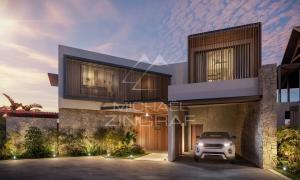
Natural materials such as precious wood and volcanic stone
Penthouses are increasingly oriented towards an offer combining comfort, security, and high technology, with generous terraces providing a unique setting in areas like Roches Noires or Poste Lafayette.
Moreover, residences integrated into hotel complexes or Smart Cities provide a “turnkey” lifestyle, combining hotel luxury, sports facilities, golf courses, and personalized services. Simplified property management is also a significant asset for investors seeking optimal returns.
Eco-construction and smart home technologies in island premium real estate
Sustainability and ecology play a central role in new real estate projects. High-end properties now incorporate:
-
Solar panels and rainwater recovery systems
-
Low-carbon footprint materials and natural insulation
-
Advanced home automation solutions for energy consumption management
-
Connected security devices, ensuring 24/7 monitoring
This integration of green technologies and smart home systems not only enhances the quality of life but also increases property value in the market, anticipating the future expectations of buyers concerned with innovation and environmental respect.
Investing in prestigious real estate in Mauritius: acquisition, profitability, and buyer profiles
Investing in this particular segment comes with a fine understanding of legal regimes, customer expectations, and appreciation mechanisms. In a market where residences cater to both local buyers and international purchasers, options are diversified to facilitate secure and profitable transactions.
Access regimes for foreigners: Property Development Scheme (PDS), IRS, Smart City Scheme, and residence permits
The Mauritian government, through the Economic Development Board, offers several schemes to facilitate purchases by foreigners, including:
-
Property Development Scheme (PDS): allows the acquisition of new or renovated properties with a minimum investment threshold, granting access to permanent residence permits.
-
Integrated Resort Scheme (IRS): suitable for properties in tourist complexes, combining luxury and high-end services.
-
Smart City Scheme: accessible in innovative areas like Moka Smart City or Cap Tamarin Smart City, with specific criteria favoring sustainability and cutting-edge infrastructure.
These regimes encourage investors to diversify their portfolios while benefiting from legal permanence and the possibility of obtaining a residence permit for themselves and their families.
High-end rental yield and exclusive services: expectations of wealthy investors and residents
The Mauritian market generates an attractive rental yield, ranging between 6 and 8%, particularly thanks to tourist activity and high-end seasonal rentals. Investors prefer properties offering premium services such as:
-
24/7 concierge and personalized rental management
-
Access to private sports facilities, including golf courses
-
Wellness spaces with integrated spa and fitness rooms
These amenities attract an elite clientele, who also value privacy and layouts suited to family, professional, or remote work life.
Profile and motivations of buyers: foreign investors, affluent locals, and digital nomads
Buyers are primarily:
-
Foreign investors (from Europe, Asia, South Africa, Emirates) looking to secure their assets
-
Affluent locals desiring a permanent residence with a strong cultural and environmental grounding
-
Digital nomads and expatriates valuing technology and spaces adapted for remote work in secure and luxurious locations
This diversity enriches the market and creates multiple demands, conducive to innovation and the upgrading of real estate offerings.
Trends, perspectives, and challenges of the Mauritian luxury real estate market by 2027
As luxury real estate in Mauritius develops, certain trends and challenges shape its evolution. Discussions around sustainable solutions and new high-potential areas coincide with the imperatives of reinforced regulation to preserve the ecological and social balance of the island.
Rise of eco-responsible properties, labeled projects, and emerging areas
The demand for properties incorporating principles of ecology and sustainable development continues to grow. Real estate projects must now:
-
Incorporate renewable energies (notably solar panels)
-
Comply with strict standards for sustainable construction and the use of natural materials
-
Offer environmental labels highlighting sustainability to buyers
Moreover, areas are emerging as true investment hubs:
-
Moka, with its Smart City designed around a balance of green urbanism and technology
-
Anahita, a residential development combining golf, marina, and discreet luxury
-
Mon Trésor Smart City and Cap Tamarin Smart City, which combine modernity and high standards
Land challenges, green regulation, and balance between international openness and local preservation
The development of the luxury real estate market is not without its challenges. The scarcity of buildable land and the increasing pressure on coastlines necessitate:
-
Reinforced regulation of constructions, promoting landscape integration and the preservation of ecosystems
-
Control of construction costs, particularly due to the surge in material prices
-
Protection against environmental hazards, such as coastal erosion
-
Maintaining a balance between openness to international clientele and safeguarding local interests
The market must thus combine economic development and social responsibility to sustain this luxury island paradise.
The role of actors like michaël zingraf real estate maurice illustrates this challenge: offering high-quality, exclusive, and sustainable properties perfectly adapted to the expectations of modern investors.
What are the main acquisition regimes for foreigners in Mauritius?
The main regimes are the Property Development Scheme (PDS), suited for new real estate projects with a fixed investment threshold; the Integrated Resort Scheme (IRS) for tourist complexes; and the Smart City Scheme dedicated to smart cities. Each offers specific advantages and generally grants access to a residence permit, thus facilitating acquisition and the gradual arrival of buyers.
How do luxury real estate prices behave in key areas of Mauritius?
Prices vary by area, generally ranging between 160,000 and 220,000 Rs/m². Grand Baie and Le Morne show the highest rates, particularly due to their tourist appeal and the quality of infrastructure. Between 2022 and 2024, a growth of around 10% is observed, indicating a rapidly expanding market.
What is the average rental yield for high-end properties?
The rental yield ranges between 6 and 8% for prestige properties, notably due to the strong seasonal tourist demand and associated quality services. Short-term rentals and dynamic management services contribute to maximizing this yield.
What are the challenges related to sustainable development in Mauritian luxury real estate?
The main challenges include land scarcity, increased regulation to preserve natural landscapes, and combating environmental risks such as erosion. Projects must integrate green technologies and adhere to strict standards to reduce their ecological footprint while meeting the growing demands of consumers.
How are buyer expectations evolving in the post-pandemic context?
Buyers are seeking more space, privacy, as well as smart home solutions and infrastructures that enable remote work. Security and proximity to premium services, including golf and spa, have become essential criteria for a comfortable living environment suited to contemporary lifestyles.
- Real Estate Grand Baie
- Real Estate Cap-Malheureux
- Real Estate Peyrebère
- Real Estate Beau Champ
- Real Estate Black River
- Real Estate Trou-aux-Biches
- Real Estate Balaclava
- Real Estate Haute Rive
- Real Estate Tamarin
- Real Estate Flic-en-Flac
- Real Estate Poste Lafayette
- Real Estate Calodyne
- Real Estate Petite Rivière Noire
- Real Estate Cascavelle
- Real Estate Port-Louis
- Real Estate Wolmar